
The Psychology Behind Penalty Kicks: Understanding Performance Anxiety in Elite Athletes
Updated: Jul 5
By Dr. Tzvi Furer, Child, Adolescent & Adult Psychiatrist | Palm Tree Psychiatry – Jupiter & Boca Raton, FL
Like millions of households across the world right now, ours has completely caught World Cup Fever.
The excitement. The athleticism. But it also brings up a lot of feelings and emotions in both athletes and spectators alike.
What surprised me most was how invested our children became. They had never been interested in sports before, which meant that I had the pleasure of watching them approach the sport with genuine curiosity and little assumptions about soccer.
As we watched the opening round of the "knockout" portion of the tournament, my son was suddenly perplexed by the concept of penalty kicks. "I don't get it, why don't they just hit it in? " Naturally, this got my brain thinking. Penalty kicks are some of the most intense moments in sports. The entire game can hinge on a single shot, and even the best athletes sometimes miss. But that still didn't answer the question - why does this happen?
The goal is large. The player is one of the best in the world. They've practiced for years, with thousands of hours of experience. This should be a piece of cake.
The answer often lies in the complex psychology of performance anxiety. And while many people automatically assume performance anxiety means giving a presentation in front of your job or your classroom, I thought it would be worth it to explore why elite athletes miss penalty kicks and how performance anxiety plays a crucial role.
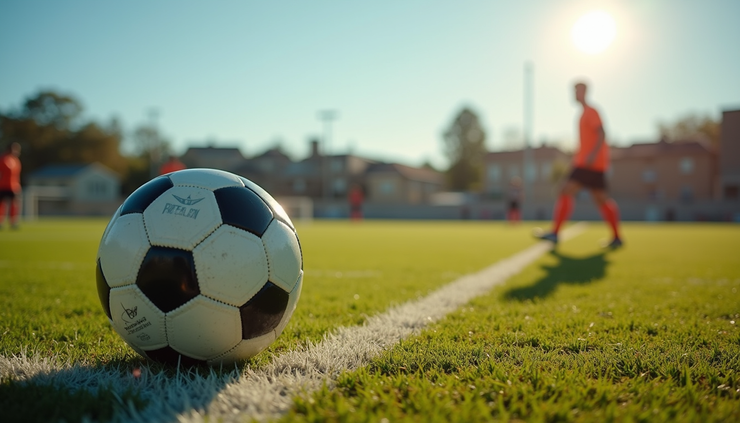
What Makes Penalty Kicks So Challenging? "Just Don't Miss!"
Penalty kicks are unique because they combine physical skill with intense psychological pressure. As opposed to a typical soccer match with dozens of athletes on the field, it suddenly becomes a one-on-one psychological battle One player versus one goalkeeper. And don't forget the one stadium holding its breath.
Unlike regular play, penalty kicks isolate the shooter into a high-stakes moment. The crowd watches at a fever pitch, the goalkeeper waits, and the clock ticks down. This situation creates a perfect storm for anxiety.
And it makes sense. There is an expectation to score. The fear of not getting it right. And especially at this level of play, the knowledge that a kick could mean the difference between advancement or a long flight home.
The assignment no longer becomes "do your best", it is now shifted into "Don't mess this up." And depending on your mental state, that level of extra pressure could be a motivator or a huge detriment.
Even athletes who have practiced thousands of shots can feel overwhelmed. Millions around the world are watching, with the knowledge that the result of this kick can be played on every streaming network, social media platform, and could even dominate the news cycle for at least the next 24 hours.
How Performance Anxiety Affects Elite Athletes
Performance anxiety is a type of stress that occurs when an athlete feels the need to perform well under pressure. It is important that while we are viewing this pressure from the lens of the World Cup, performance anxiety often affects athletes both due to external expectations but those self-imposed.
It is not uncommon to hear about athletes that expect themselves to play at a certain level, which may also impact their overall confidence and self-esteem.
This cascade can also trigger a number of physical and mental responses that can interfere with execution.
Anxiety isn’t “just in someone’s head.” Elite athletes experience measurable physiological changes when the pressure rises. Heart rate increases, breathing becomes shallower, muscles become tighter, and attention narrows. Those changes evolved to help us survive danger, but they are far less helpful when the task requires precision rather than power. A penalty kick is ultimately a fine motor skill, and subtle increases in muscle tension can be enough to alter timing and accuracy.
A penalty kick is ultimately a precision movement. Even subtle increases in muscle tension or changes in breathing can alter coordination and timing, making a kick just a fraction less fluid than it would have been in practice.
The psychological effects of performance anxiety can be just as significant as the physical ones. Athletes may become overwhelmed by negative thoughts, begin to doubt their own abilities, or find it difficult to concentrate on the task in front of them. Rather than trusting the skills they have developed through years of practice, they may start overthinking every aspect of the kick: how do they kick? Should they distract the goalkeeper?
This shift from instinctive execution to conscious analysis can disrupt movements that would otherwise occur naturally, making even the world’s best players more vulnerable to mistakes under pressure.
When athletes focus too much on the mechanics instead of the outcome, they risk "paralysis by analysis." This means their natural, practiced movements become stiff and unnatural. They suddenly doubt themselves, and this second-guessing of their natural movements and abilities can lead to split-second decisions or changes to their overall play.
Examples of High-Profile Misses
Several famous penalty misses highlight how anxiety can affect even the best players.
Roberto Baggio (1994 World Cup Final): Baggio missed the decisive penalty for Italy, a moment often linked to the immense pressure of the final.
Lionel Messi (2016 Copa America Final): Messi missed a penalty in a shootout, a rare event for such a confident player, showing that anxiety can affect anyone. He wound up temporarily retiring from the sport, before coming back to huge fanfare and record-breaking feats at the 2026 World Cup.
These examples show that no athlete is immune to the psychological challenges of penalty kicks.
Strategies Athletes Use to Manage Anxiety
Elite athletes use various techniques to control anxiety and improve their chances of scoring. They don't simply hope it goes away, they prepare for it.
One of the most common strategies is visualization, in which athletes mentally rehearse successfully taking a penalty kick before they ever step onto the field. Many also practice positive self-talk, replacing thoughts such as “don't miss this" with more constructive cues that reinforce confidence and preparation.
Rather than becoming preoccupied with the consequences of the kick, athletes are taught to focus on the process itself: taking a controlled breath, following their routine, and trusting the skills they have developed through years of practice.
Managing the body’s stress response is equally important. Techniques such as controlled breathing can help slow the heart rate and reduce the physiological effects of anxiety, while relaxation exercises may decrease unnecessary muscle tension that could interfere with precision.
Many players also rely on a consistent pre-kick routine. Although these routines may appear superstitious to spectators, they serve an important psychological purpose by creating a sense of muscle memory in an otherwise highly stressful situation.
Finally, even the world’s greatest athletes rarely face these moments alone. Coaches and sports psychologists work with players to develop strategies for managing pressure long before they reach a World Cup penalty shootout. Equally important is the support of teammates, who can help normalize the experience, reinforce confidence, and remind players that one kick does not define an entire career.
The Role of Experience and Practice
Experience plays a significant role in managing penalty kick anxiety. Athletes who have faced similar pressure situations before tend to perform better. Younger, more inexperienced players may struggle with the onset of anxiety, and this may be their first time in a high-pressure environment.
Practice under simulated pressure conditions can help athletes get used to the stress and reduce anxiety during "real" games with higher stakes.
What Coaches and Teams Can Do
Coaches also play an important role in helping athletes prepare for high-pressure moments long before they occur in competition. Training can incorporate realistic pressure simulations that mimic the emotional intensity of a penalty shootout, allowing players to become more comfortable performing under stress.
Many coaches also emphasize mental skills training alongside physical preparation, teaching athletes techniques to manage anxiety, maintain focus, and recover from mistakes.
Fostering a supportive team culture encourages players to view setbacks as opportunities for growth rather than personal failures. When athletes are reminded that their value extends beyond a single result, they are often better equipped to perform with confidence when the stakes are highest.
Teams that prioritize mental health and psychological training often see better performance in high-pressure moments. At Palm Tree Psychiatry, we have worked with a number of high-level athletes across multiple sports to achieve the most optimal level of peak performance possible.
Penalty kicks test more than just physical skill. They challenge an athlete’s ability to manage pressure and anxiety across situations that may be unbearable to most people.
Understanding the psychology behind these moments helps explain why even elite athletes sometimes miss. By recognizing the role of performance anxiety, athletes, coaches, and fans can appreciate the mental toughness required to succeed.
So What Do You Say?
As the World Cup game came to a close that gave even us at home anxiety, I turned towards my son and tried to distill the above as succintly as possible. “It’s harder than it looks,” I finally told him.
He nodded and turned back toward the television, seemingly satisfied with the explanation.
I kept thinking about the question, though, because in many ways it wasn’t really about soccer. We all have our own version of a penalty kick. For some people it’s a job interview. For others it’s giving a presentation, taking an examination, or walking into an operating room. The circumstances change, but the psychology is remarkably similar. When enough meaning becomes attached to a single moment, even things we’ve practiced hundreds or thousands of times can suddenly feel unfamiliar.
Perhaps that’s why these moments captivate us. They remind us that even the very best performers aren’t immune to pressure, they’ve simply learned how to keep moving despite it. 🌴 At Palm Tree Psychiatry, Dr. Tzvi Furer is an experienced adult, child and adolescent psychiatrist who is ready to aid you in your mental health journey. He also gets lost in a good soccer match, but believes in the spirit of competition. If you are interested in a consultation, please visit our website at www.palmtreepsychiatry.com.


Comments